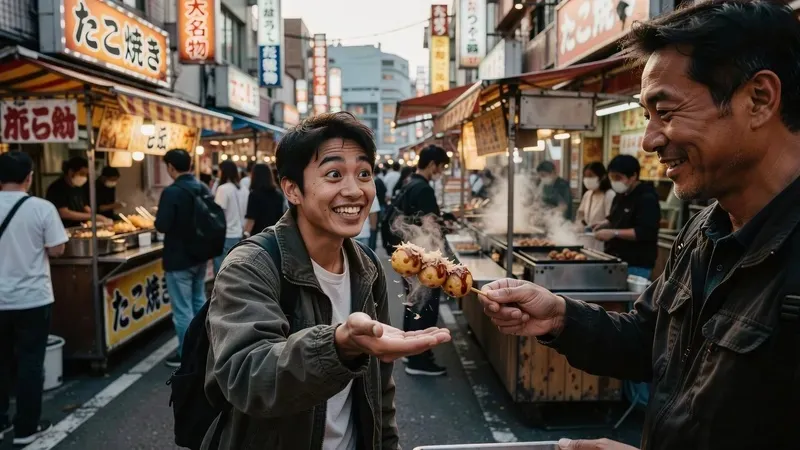
from $74 Hungry Osaka: Award-Winning Street Food Tour — 15 Tastings & 3 Drinks
- 15 authentic tastings at 5 local spots
- 3 drinks (alcoholic & non-alcoholic)
- Award-winning tour, 1,569 verified reviews
- Small group — max 8 guests
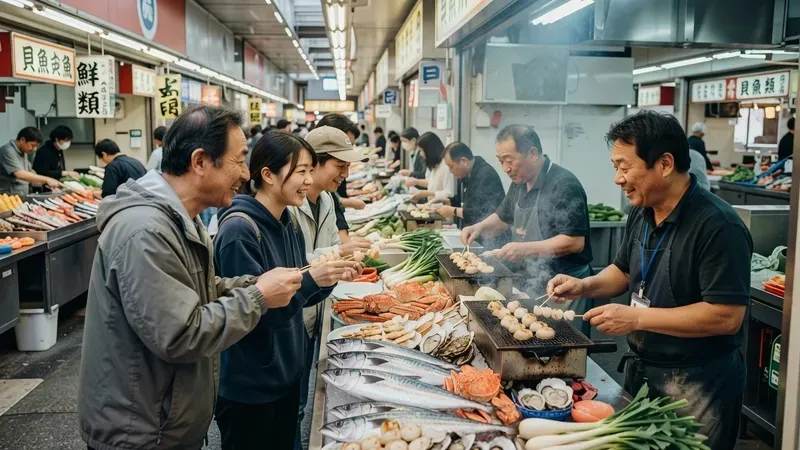
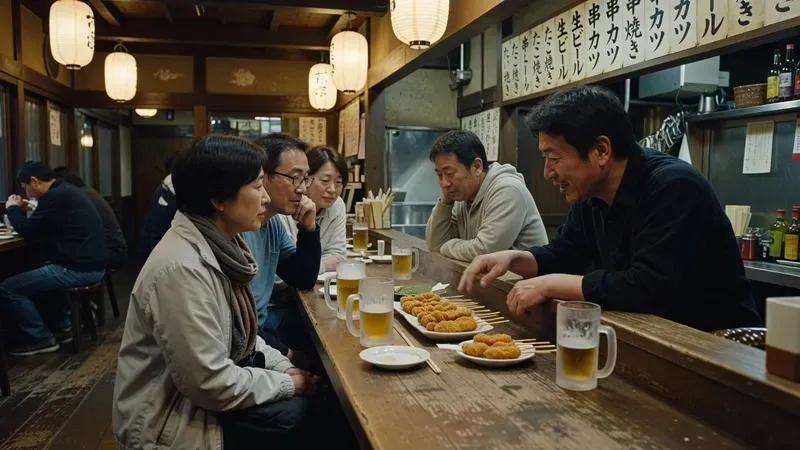
Kushikatsu sizzling straight from the fryer, takoyaki oozing warm in your hand, a standing bar where every stool is taken by locals — only an osaka street food tour gets you inside these places. Expert-led small groups, up to 17 tastings per tour, free cancellation on every booking.
best tour Osaka's Award-Winning Street Food Night Tour
Award-winning Osaka street food tour through Shinsekai's most authentic neighbourhood spots — 15 local tastings including kushikatsu, takoyaki, karaage, doteyaki, and oden, plus 3 drinks. Limited to 8 guests, this is Osaka the way regulars eat it: no tourist menus, no shortcuts.
The award-winning Hungry Osaka tour is limited to 8 guests per departure. Spots fill up fast on weekends and public holidays — check availability now and book with free cancellation.
From the award-winning Hungry Osaka night tour through retro Shinsekai to a budget-friendly 2-hour walk along Dotonbori's famous canal — these are the best osaka food tours leaving every day, led by local guides who know japanese food and japanese cuisine deeply, taking food lovers to hidden gems at local spots you'd never find alone.
from $74
from $68
from $63
from $67
from $81
from $50 | Tour | Duration | Book | Price | Best For | Rating |
|---|---|---|---|---|---|
| 3 hours | $74 | Check Availability | Award-winning Shinsekai night tour — max 8 guests, 15 tastings | 4.9 ★ | |
| 3 hours | $68 | Check Availability | Most popular for 7 years straight — 15 dishes, 3 drinks | 4.8 ★ | |
| 2.5 hours | $63 | Check Availability | Dotonbori sake bars & Michelin-featured stops — wheelchair accessible | 4.8 ★ | |
| 3 hours | $67 | Check Availability | Up to 17 tastings including handmade gyoza & sushi set | 4.7 ★ | |
| 3 hours | $81 | Check Availability | Ura Namba backstreets — 5 stops, 13 dishes, perfect 5.0 rating | 5.0 ★ | |
| 2 hours | $50 | Check Availability | Flexible Dotonbori & Namba walk — most affordable option | 4.6 ★ |

Every osaka street food tour follows the same essential logic: a local guide takes you to 4–5 eateries that no tourist would walk into alone — places with Japanese-only menus, regulars packed into every seat, and food that has zero in common with what you'll find near the Glico Man. The kitchen of japan nickname exists for a reason. osaka japan has more Michelin-starred restaurants per capita than Paris, and its street food scene is just as obsessively quality-driven. A food walking tour is the fastest, most direct way into it.
The most popular district for an osaka street food tour is Shinsekai — a retro neighbourhood that peaked in the 1920s, went into decline, and is now experiencing a renaissance driven by the very food stalls that kept it alive. The centrepiece is kushikatsu, the osaka street food that defines the district: meat and vegetables lightly battered and deep-fried on skewers, served with a communal dipping sauce. The rule — never double-dip — is not a tourist joke. It is vigorously enforced. Your guide will explain it in detail before you break it.
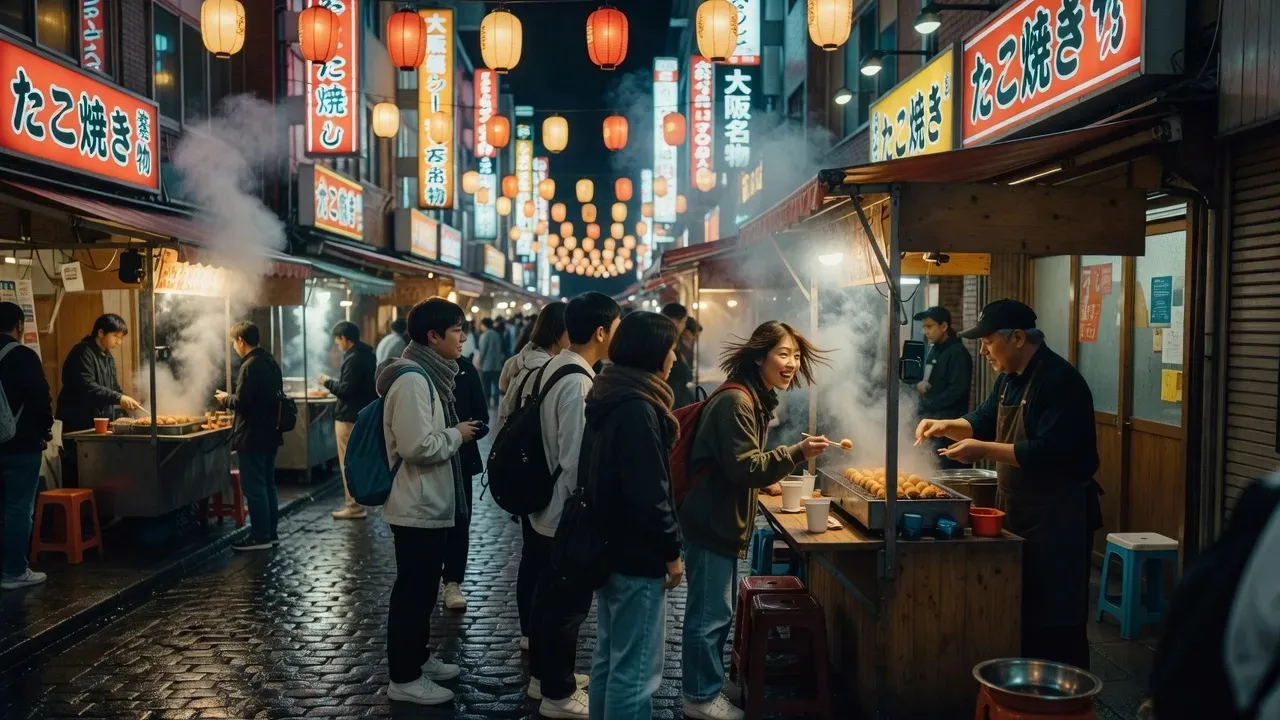
Alongside kushikatsu, every osaka food tour worth its name covers takoyaki (octopus-filled grilled balls, crispy outside, molten inside), karaage (japan's fried chicken, distinct from anything in the western fast-food tradition), and doteyaki (beef tendon slow-simmered in miso until it collapses into something more stew than meat). These four dishes alone justify the trip.
The osaka food scene differs from tokyo's in one fundamental way: osaka people (Osakans say "kuidaore" — eat until you drop) judge a city by what it eats, not what it looks like. Every dish has a story attached — often centuries old — and every local guide on an osaka street food tour knows that story and tells it with audible pride.
The dishes vary slightly between tours and neighbourhoods, but the core osaka street food canon is remarkably consistent. Kushikatsu from Shinsekai. Takoyaki from Dotonbori (where the original Aizuya shop opened in 1935). Okonomiyaki — osaka's savoury pancake, categorically different from hiroshima's layered version. Gyoza in osaka style: a little thicker, pan-fried first. Udon served in a lighter, sweeter dashi broth than the soy-heavy tonkotsu broths of northern japan.
The best guided food tour in osaka will also introduce you to tachinomiya culture — standing bars where a glass of local sake or highball costs less than 300 yen and regulars stand shoulder-to-shoulder after work. This is a japanese street food experience unavailable in guidebooks.
| Dish | What It Is | Where You'll Find It | Tours That Include It |
|---|---|---|---|
| Kushikatsu | Battered deep-fried skewers — meat, veg, or seafood; served with communal dip | Shinsekai | Tours 1, 2, 4, 5 |
| Takoyaki | Octopus balls grilled in cast-iron moulds; crispy outside, gooey inside | Dotonbori & Shinsekai | Tours 1, 2, 3, 4, 5, 6 |
| Doteyaki | Beef tendon slow-simmered in sweet miso; a Shinsekai staple | Shinsekai | Tours 1, 2 |
| Karaage | Japanese fried chicken seasoned with ginger & soy — lighter than western versions | Izakaya stops | Tours 1, 2 |
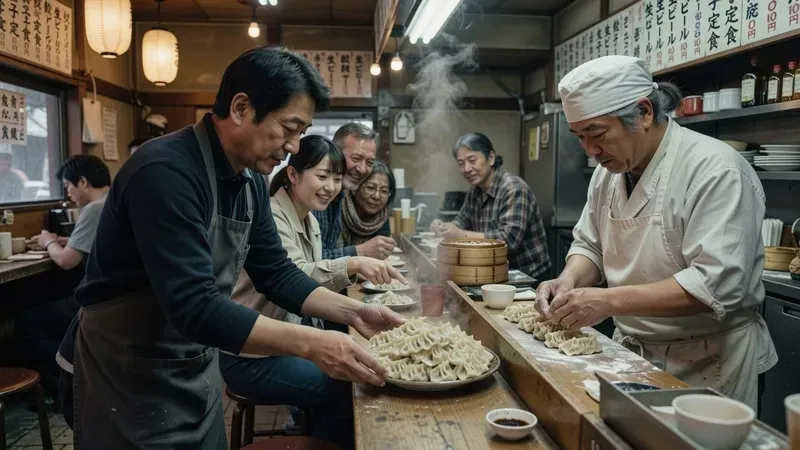
| Gyoza | Pan-fried dumplings; osaka style is plumper and crispier on the base | Shinsekai & Namba | Tours 2, 4 |
| Okonomiyaki | Osaka-style savoury pancake with cabbage, pork, seafood & okonomi sauce | Dotonbori & Namba | Tours 3, 5, 6 |
| Udon | Thick wheat noodles in light dashi broth — osaka's version is golden and delicate | Shinsekai standing bars | Tours 1, 2 |
| Sashimi / Sushi set | Fresh fish selected by the chef; paired with tempura and miso soup | Dotonbori izakaya | Tour 3 |

The three main districts for an osaka street food tour each have a distinct personality, and which you choose should depend on what you want from the evening. The good news: several tours cover two or more areas in a single outing.
Shinsekai is the oldest and most atmospheric. Built in 1912 to mimic Paris (the southern half) and New York (the northern half), it decayed after World War II and was left behind as Osaka modernised. Today it is the city's most concentrated street food destination — kushikatsu counter bars every 50 metres, elderly locals at yakitori stalls, and a retro neon aesthetic that predates instagram by several decades. The award-winning Hungry Osaka tour and the Osaka Food Tours Inc osaka food tour both operate entirely within Shinsekai and its immediate surroundings. If this is your first osaka japan visit, start here.
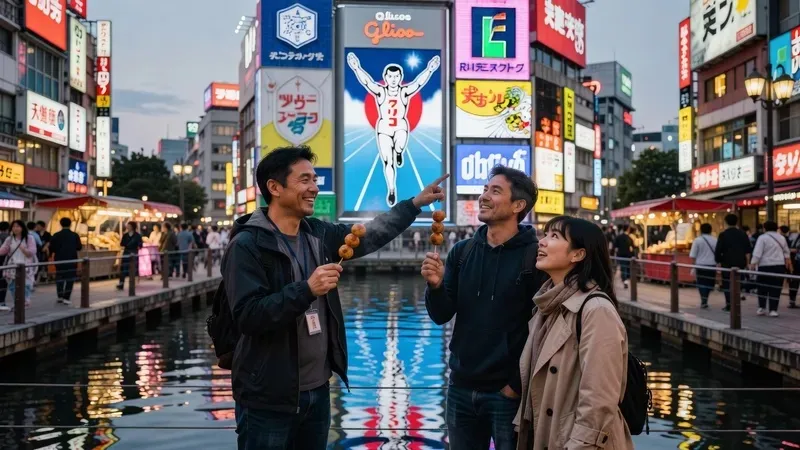
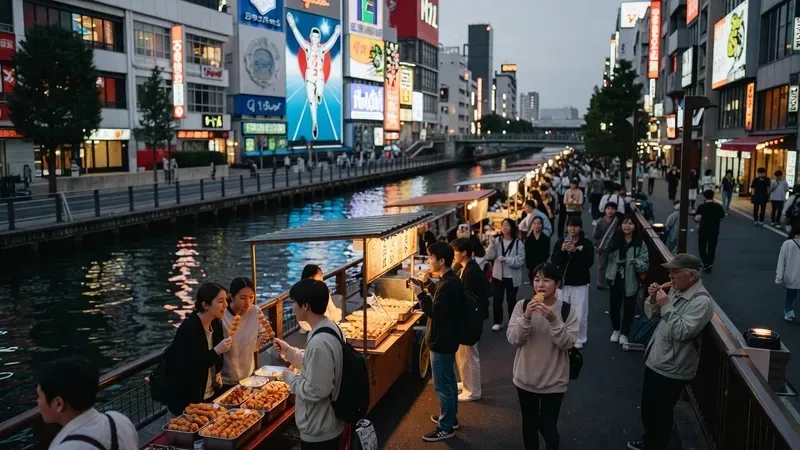
Dotonbori is the famous one — the canal, the Glico Man running sign, the mechanical crab on the Kani Doraku restaurant. It is unambiguously touristy at ground level, but underneath that surface layer are side streets and shotengai covered markets that locals have eaten in for generations. The Local Guide Stars tour (tour-3) and the DeepExperience dotonbori tour (tour-6) both navigate this gap expertly. The food is excellent; the district is louder and more crowded.
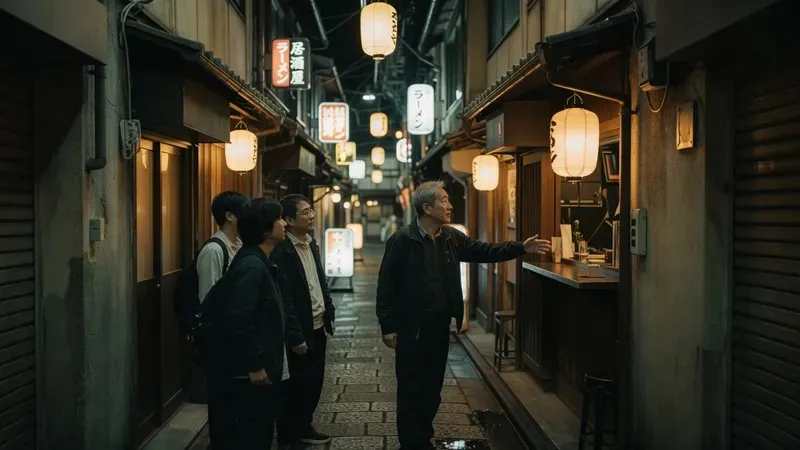
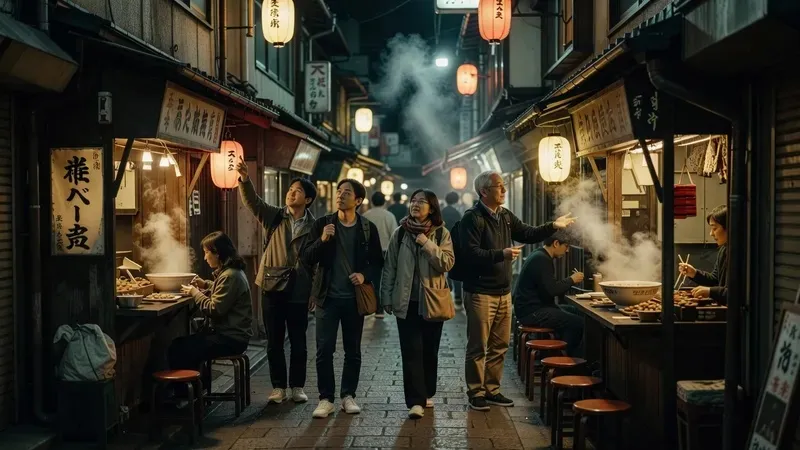
Ura Namba — literally 'behind Namba' — is the insider choice. A maze of lantern-lit backstreets between Namba and Shinsaibashi, it has no famous landmarks and no tourist infrastructure. The bars are tiny, the menus are handwritten in Japanese, and the salarymen shoulder to shoulder at the counters have no idea why a tourist would be here. The Namba Food Tours hidden backstreet tour (tour-5) operates exclusively in Ura Namba. Perfect 5.0 from every review written.
| District | Atmosphere | Best For | Tours Here |
|---|---|---|---|
| Shinsekai | Retro 1920s — neon signs, kushikatsu counters, standing bars | First-time visitors, authentic local food | Tours 1, 2, 4 |
| Dotonbori | Famous canal — iconic signage, side alleys, lively crowds | Photography, wide range of dishes | Tours 3, 6 |
| Namba / Ura Namba | Hidden backstreets — izakaya, tachinomiya, no English menus | Adventurous eaters, off-the-beaten-path | Tour 5 |
| Dotonbori + Namba | Best of both — canal sights + local neighbourhood stops | Balanced experience, all ages | Tour 6 |

Osaka is one of japan's most year-round tourist destinations — the food scene doesn't slow for seasons. But timing your osaka street food tour correctly makes a real difference to the experience, particularly around public holidays (Golden Week in late April to early May, Obon in August) when even the deepest Shinsekai side streets fill up.
The sweet spot is October through December and March through May: temperatures are comfortable for evening walking, the izakaya culture is in full swing, and the standing bars of Ura Namba are at their most atmospheric. January and February see the smallest crowds of the year — tour groups shrink to 2–3 people, guides slow down, and you get the most intimate experience possible. Summer (July–August) is hot and humid but the night food tour culture intensifies: osaka people eat later, the city stays out later, and the evening tour slots (typically 5–6 PM start) are cooler than they look on paper.
| Season | Crowd Level | Evening Temp | Best For |
|---|---|---|---|
| March–May (Spring) | Moderate | 15–22°C | Cherry blossom backdrop, comfortable walking, full izakaya season |
| June–August (Summer) | High | 25–33°C | Late-night food culture peaks — coolest after 7 PM |
| September–November (Autumn) | Moderate | 18–25°C | Best weather for walking tours — optimal osaka food tour season |
| December–February (Winter) | Low | 5–12°C | Most intimate tours — standing bar culture at its warmest inside |
An osaka street food tour is a walking experience in a densely built urban neighbourhood — comfort matters more than style. The eateries range from low stools at kushikatsu counters to stand-up bars where you hold your plate, so there is no formal dress code. Most guides specifically request comfortable shoes: Shinsekai's lanes, Dotonbori's covered arcades, and Ura Namba's backstreets all have uneven pavement.
For the guided food tour in osaka food quantities — anywhere from 12 to 17 tastings — arrive genuinely hungry. One traveller review describes it best: 'Do not eat for four hours beforehand. I ignored this advice and regretted it by stop three.' Most tours include alcoholic and non-alcoholic drink options; if you plan to drink, pace yourself at the early stops — the best eateries tend to be later in the route.
All tours run in all weather. Osaka's summer evenings bring sudden rain; a small packable umbrella takes up no space. October through December evenings cool quickly after sunset — one light layer is enough.
Davin was the best tour guide we had anywhere in Japan. The food was extraordinary and the stories behind each dish made the whole thing feel like a history lesson disguised as dinner. We left Shinsekai with full stomachs and actual knowledge of what osaka people actually eat.
Anna made this tour something special. She took us to places where the menu was entirely in Japanese, explained every dish with genuine enthusiasm, and walked us through backstreets I'd have walked past forty times without noticing. Best three hours of our whole Japan trip.
I've done food tours in Bangkok, Rome, and Mexico City. This one sits at the top. The ura namba area is a revelation — no tourists, no English signage, just a local guide ordering things I couldn't name and every single one of them being the best version of that dish I've ever had.
Every guide on these osaka food tours has lived in Osaka for years — they know the eateries, the chefs, and the stories. Several tours have won best food tour awards on major booking platforms.
Most osaka street food tours are capped at 8–9 guests. Small group sizes mean the guide can take you into tiny counter bars, standing bars, and family-run spots that a large tour group simply cannot enter.
The largest osaka food walking tour includes up to 17 dishes across 4 eateries. Every tour includes multiple drinks. You will not need dinner afterwards — and most guests don't want it.
Japanese-only menus, no signs in english, counters with a permanent waiting list of regulars — your guide's job is to get you past the front door and make you feel like you belong there.
Every osaka street food tour here offers free cancellation up to 24 hours before your booking. Reserve your slot now, and cancel without penalty if your plans change.
While full vegan and gluten-free menus are limited in osaka's street food scene, several tours can partially accommodate dietary needs with advance notice. Ask when booking.
An osaka street food tour is a guided walk through osaka's best food neighbourhoods — Shinsekai, Dotonbori, Namba, or Ura Namba — where a local expert takes you to 4–5 authentic eateries for tastings of the city's signature dishes: kushikatsu, takoyaki, okonomiyaki, gyoza, udon, and more. Most tours include 12–17 tastings and 2–3 drinks, run for 2–3 hours, and operate in the evening.
Osaka street food tours range from $50 to $81 per person. The most affordable option is the DeepExperience 2-hour Dotonbori & Namba tour at $50. The award-winning Hungry Osaka tour with 15 tastings and 3 drinks costs $74. All prices include food and drink at the listed number of stops; optional extras are at your own cost.
For first-time visitors, the Hungry Osaka Street Food Tour (tour-1) is the top pick: 4.9-star rating, 1,569 reviews, 15 tastings, 3 drinks, max 8 guests, award-winning — full breakdown in our <a href='/blog/osaka-night-food-tour/'>Osaka night food tour guide</a>. For the most-reviewed experience, the Osaka Food Tours Inc tour (tour-2) has 2,594 verified reviews and has ranked #1 in osaka for 7 consecutive years. For something off the beaten path, the Namba Hidden Backstreet tour (tour-5) holds a perfect 5.0 rating — see our <a href='/blog/osaka-izakaya-bar-hopping-tour/'>izakaya bar hopping guide</a>.
Expect to eat osaka's greatest hits: kushikatsu (battered deep-fried skewers), takoyaki (grilled octopus balls), doteyaki (miso-simmered beef tendon), karaage (japanese fried chicken), gyoza (pan-fried dumplings), okonomiyaki (osaka savoury pancake), and udon in a light dashi broth. Depending on the tour, you may also try sashimi, yakitori, tonpeiyaki, and traditional japanese desserts. For a full guide to osaka's essential street food dishes, see our <a href='/blog/best-street-food-in-osaka-japan/'>best street food in Osaka Japan guide</a>. Takoyaki enthusiasts should also read our dedicated <a href='/blog/osaka-takoyaki-tour/'>Osaka takoyaki tour guide</a>.
Shinsekai is osaka's retro 1920s neighbourhood — the spiritual home of kushikatsu, standing bars, and local-only izakaya with no tourist infrastructure. Dotonbori is the famous canal district with iconic signage and a louder tourist presence, but excellent side-street food underneath. Most serious osaka japan street food tours use Shinsekai — see our <a href='/blog/osaka-night-food-tour/'>Osaka night food tour guide</a> for the full Shinsekai experience. If you prefer sightseeing landmarks alongside the food, see our <a href='/blog/osaka-street-food-walking-tour-dotonbori/'>Dotonbori walking tour guide</a>.
Most osaka street food tours run 2.5–3 hours. The DeepExperience Dotonbori tour is shorter at 2 hours. All tours typically start in the early evening (5–6 PM) and finish in time to continue exploring osaka's nightlife independently if you wish.
osaka's street food scene is heavily meat and seafood focused, and most tours cannot fully accommodate vegans or vegetarians — kushikatsu, takoyaki, and many izakaya dishes contain meat, seafood, gluten, or dashi fish stock. Some guides, particularly on the DeepExperience Dotonbori tour (tour-6), will actively seek vegetarian options — see our <a href='/blog/osaka-street-food-walking-tour-dotonbori/'>Dotonbori walking tour guide</a> for details. Contact your chosen operator before booking if dietary requirements are a concern. Our <a href='/blog/best-street-food-in-osaka-japan/'>best street food in Osaka guide</a> also covers vegetarian-accessible options.
Kushikatsu is osaka's most iconic street food: skewers of meat, vegetables, or seafood dipped in a light panko batter and deep-fried, served with a communal dipping sauce. The dish was invented in Shinsekai in the early 20th century and remains tightly associated with the district. The golden rule of osaka kushikatsu — never double-dip your skewer into the shared sauce — is cultural etiquette taken seriously at every counter bar in Shinsekai.
Osaka's food tour season runs year-round. The best weather for a food walking tour is October through November (cool evenings, moderate crowds) and March through May (spring, comfortable temperatures). January and February offer the most intimate tours with the fewest guests. Summer evenings (July–August) are hot but the japanese street food night culture is at its most vibrant after 7 PM.
For the most popular tours — especially the Hungry Osaka and Osaka Food Tours Inc options — booking 2–3 days ahead is advisable on weekends and public holidays. Weekday evenings are often bookable same-day. All tours on this page include free cancellation up to 24 hours before departure, so there is no risk to booking early.
The Hungry Osaka Street Food Tour is an award-winning guided food experience in osaka's Shinsekai district, run by Hungry Osaka Tours. It includes 15 tastings and 3 drinks at 5 carefully chosen local spots — an izakaya, a food stall, a standing bar, and two restaurants. Group size is capped at 8. It holds a 4.9-star rating from over 1,500 verified bookings and is widely considered the best osaka food tour for first-time visitors. Full guide: <a href='/blog/osaka-night-food-tour/'>Osaka night food tour — complete guide</a>.
Meeting points vary by tour: the Hungry Osaka tour meets at Ebisucho Station (Metro Sakaisuji Line, Exit 3). The Osaka Food Tours Inc tour meets at Dobutsuen-mae Station (Midosuji Line, Exit 1). The Local Guide Stars tour meets outside Don Quijote Dotonbori. The Namba Hidden Backstreet tour meets at Namba Station Exit 1, by the Peace Memorial Statue. Meeting instructions are provided at booking — arrive 10–15 minutes early.